Salt plays an important role in many textile dyeing processes, particularly when coloring cotton and other cellulosic fabrics. However, not every type of salt is suitable for industrial dyeing. The choice depends on the dye chemistry, fabric, purity requirements and processing conditions. Selecting an appropriate salt grade can help textile manufacturers maintain more consistent dyeing results and reduce avoidable production difficulties.
The most common salt used in textile dyeing is sodium chloride (NaCl), although sodium sulfate is also used in certain processes. Textile manufacturers generally prefer grades with controlled impurities, suitable particle sizes and reliable dissolution characteristics. Understanding these differences helps dyeing units choose materials that meet their production requirements.
What Is Textile Dyeing Salt?
Textile dyeing salt is an industrial material used as an electrolyte in certain fabric dyeing processes. It helps control how dissolved dye molecules interact with textile fibres, particularly during the dyeing of cotton, viscose and other cellulosic materials.
In conventional reactive and direct dyeing, electrolyte addition can encourage dye molecules to move from the dye bath towards the fabric. This supports dye exhaustion, which describes the transfer of dye from the solution onto the fibre.
The effectiveness of textile dyeing salt depends on the complete dyeing process, including dye formulation, temperature, liquor ratio, pH and salt concentration.
Why Is Salt Added to Textile Dye Baths?
Many reactive dyes carry a negative charge when dissolved in water. Cellulosic fibres can also exhibit a negative surface charge under dyeing conditions, creating electrostatic repulsion that can limit dye uptake.
Adding an appropriate electrolyte reduces this repulsion and can improve the movement of dye towards the fibre.
Salt is commonly added to help:
- Promote dye exhaustion during conventional reactive dyeing.
- Improve dye uptake under suitable processing conditions.
- Support more controlled distribution of dye when the correct addition procedure is followed.
- Achieve the dye concentration required by an established dyeing recipe.
- Maintain consistency when combined with suitable equipment and process controls.
Salt does not independently fix reactive dyes onto fibres. Chemical fixation generally requires appropriate alkaline conditions and depends on the dye system being used.
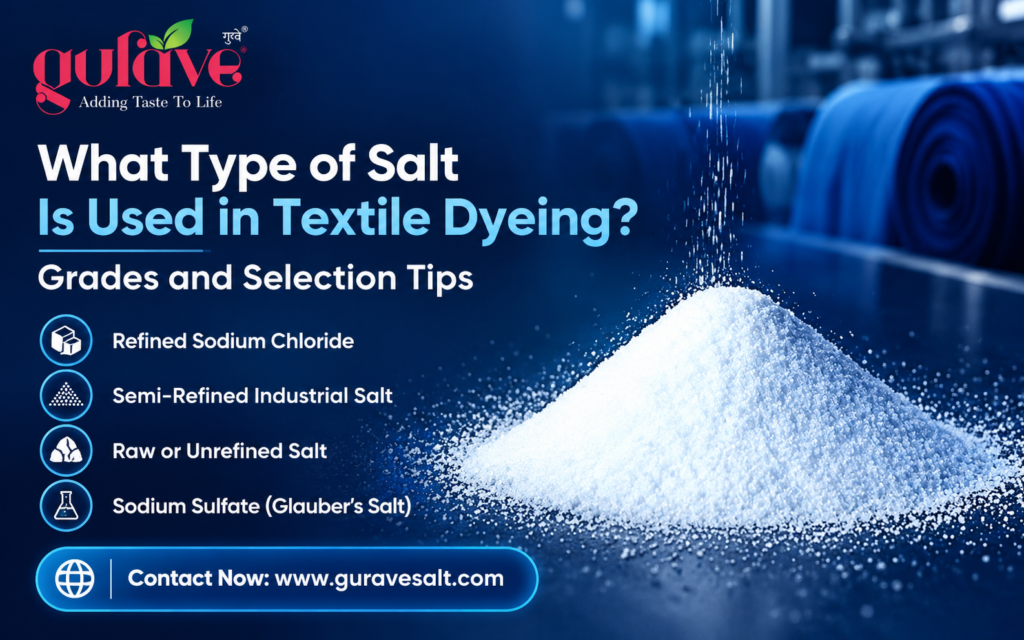
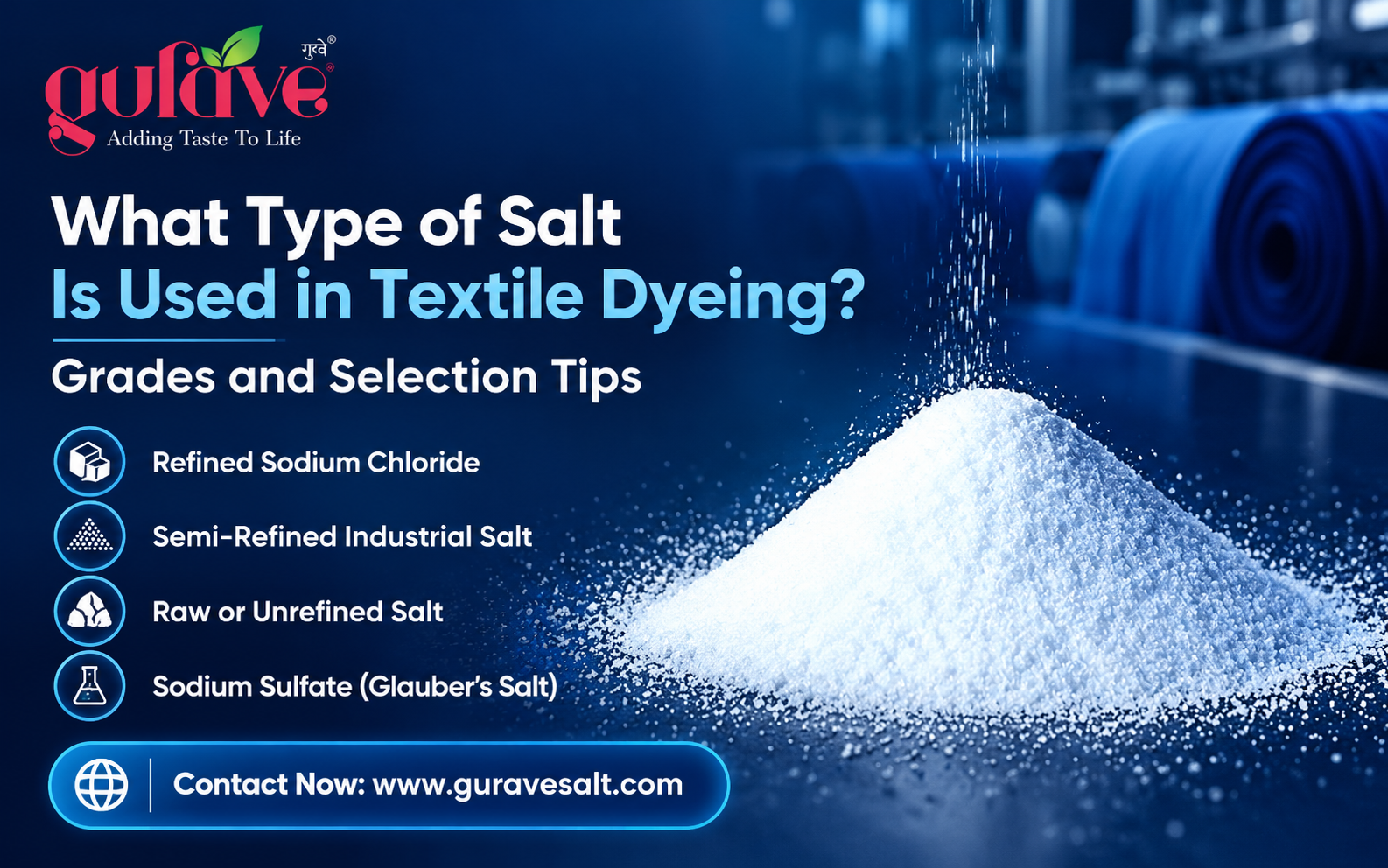
What Types of Salt Are Used in Textile Dyeing?
Different salt grades are available for industrial applications, but their suitability is determined by chemical composition and process requirements rather than product names alone.
1. Refined Sodium Chloride
Refined sodium chloride is commonly considered for textile processing because refining can reduce unwanted impurities and produce a more consistent material.
Depending on the manufacturing method and final specifications, refined salt may offer controlled sodium chloride content, moisture and particle-size distribution.
For textile dyeing units operating under closely controlled process conditions, consistency between salt deliveries can be particularly valuable.
However, a refined product should still be assessed against a current specification or Certificate of Analysis rather than assuming that all refined grades have identical quality.
2. Semi-Refined Industrial Salt
Semi-refined industrial salt undergoes processing that can remove some impurities while retaining a composition suitable for certain industrial applications.
It may be considered for textile dyeing when its sodium chloride content, calcium and magnesium levels, insoluble matter and other characteristics meet the requirements of the dyeing process.
The suitability of semi-refined salt should be determined through technical evaluation and production trials where necessary.
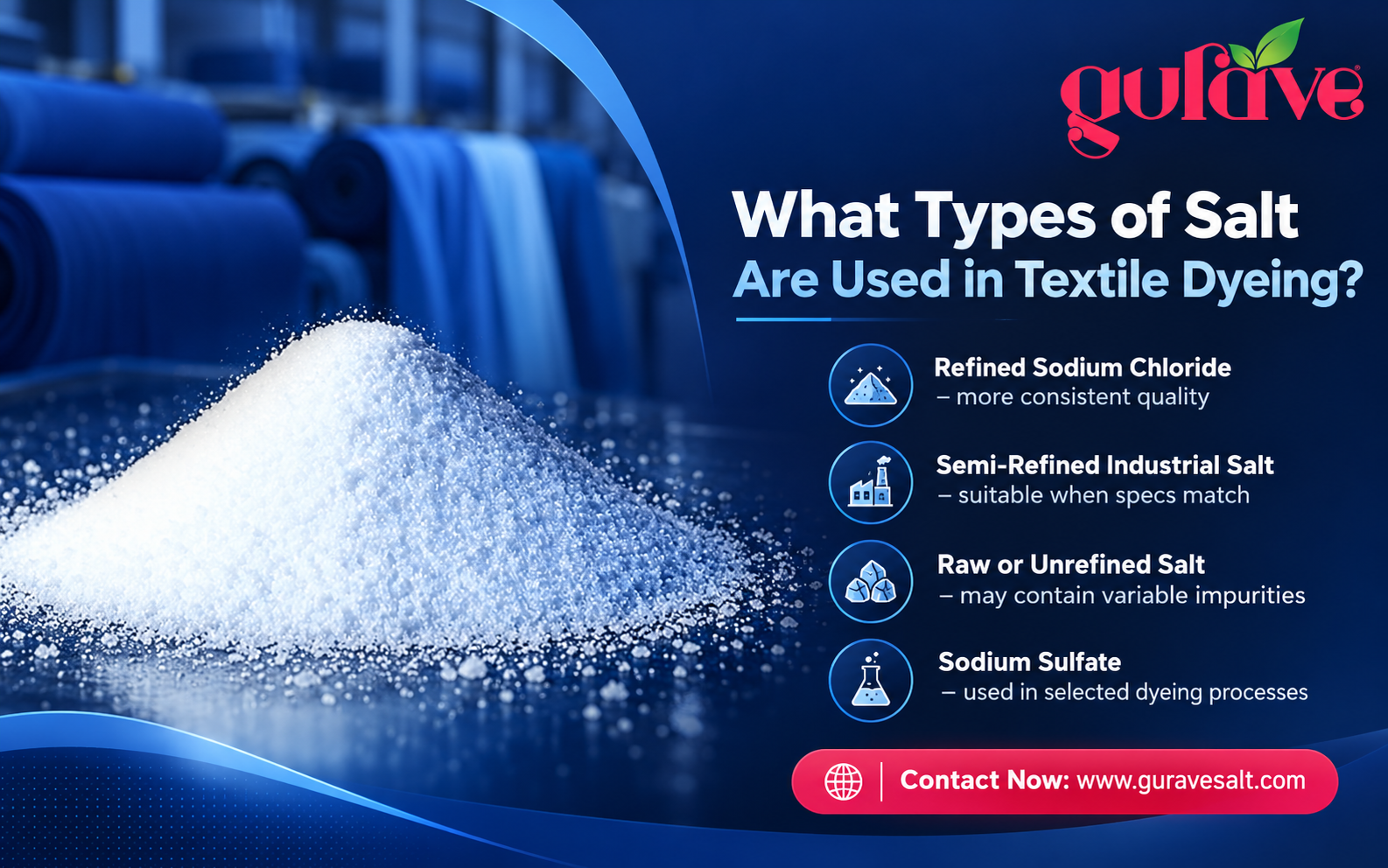
3. Raw or Unrefined Salt
Raw salt is generally subjected to less processing than refined grades.
Its composition can vary according to the source, harvesting conditions and cleaning methods. Some raw salt products may contain higher or more variable levels of mineral impurities and insoluble matter.
These differences can create challenges in dyeing operations where precise chemical control is required.
Raw salt should therefore not be treated as an automatic substitute for a specified textile-grade product.
4. Sodium Sulfate (Glauber’s Salt)
Sodium sulfate is another electrolyte used in selected textile dyeing processes.
Although sodium chloride and sodium sulfate can perform related functions in dye baths, they are chemically different materials. Their required quantities and processing behavior can vary.
Glauber’s salt specifically refers to sodium sulfate decahydrate, while sodium sulfate may also be supplied in anhydrous form.
Textile manufacturers should follow the recommendations associated with their particular dye system before replacing one electrolyte with another.
How Does Salt Affect Color Absorption During Textile Dyeing?
The role of textile dyeing salt becomes clearer when examining what happens inside a dye bath.
During conventional reactive dyeing, dye molecules dissolve in water and come into contact with the textile fibres. Without an appropriate electrolyte concentration, some dyes may remain in the solution rather than being sufficiently absorbed by the fabric.
Introducing sodium chloride changes the ionic environment of the dye bath. This can reduce electrostatic repulsion and encourage dye molecules to move towards the fibre.
However, successful dyeing involves more than increasing salt concentration.
Salt Concentration and Dye Exhaustion
The required electrolyte concentration depends on the dye formulation, depth of shade, fabric and equipment.
Insufficient salt may result in lower dye exhaustion in processes that depend on electrolyte addition. Excessive or incorrectly managed salt addition can also affect dyeing behavior and increase dissolved-salt loads in wastewater.
For this reason, textile processors should follow validated recipes rather than applying one standard salt dosage to every fabric or shade.
The Importance of Controlled Salt Addition
Adding salt at the correct stage can influence how dye is taken up by the material.
In some processes, gradual or staged addition helps manage the rate of dye exhaustion and reduce the risk of uneven uptake.
The exact sequence should follow the dye manufacturer’s instructions and the textile mill’s operating procedures.
Does Salt Improve Color Fastness?
Salt contributes to dye uptake in suitable processes, but color fastness depends on several additional factors.
These include the dye’s chemical properties, fixation conditions, washing procedures and the nature of the fibre.
Proper washing and removal of unfixed dye remain important even when the correct salt grade has been selected.
What Salt Specifications Matter for Textile Dyeing?
Choosing the right industrial salt involves reviewing several technical characteristics.
A product described as high purity may still be unsuitable if its other properties do not meet the process requirements.
| Parameter | Why it matters |
| Sodium chloride content | Helps buyers assess the salt’s composition and calculate appropriate additions |
| Calcium and magnesium | May influence dye bath chemistry and interact with other process chemicals |
| Insoluble matter | Can introduce unwanted particles into processing equipment or the dye bath |
| Moisture content | Affects storage, handling and the amount of dry salt delivered |
| Particle size | Influences handling and the rate of dissolution |
| Dissolution characteristics | Important where salt must dissolve before or during controlled addition |
| Batch consistency | Helps maintain repeatable processing conditions across deliveries |
Sodium Chloride Purity
NaCl purity is an important starting point when comparing industrial salt products.
Higher purity may be desirable for certain dyeing systems, but no single percentage is appropriate for every application.
Manufacturers should establish their required purity based on process conditions, technical recommendations and production testing.
Calcium and Magnesium Content
Calcium and magnesium compounds can affect textile-processing chemistry.
Depending on the dyes and auxiliaries used, elevated hardness-related impurities may contribute to unwanted interactions or processing complications.
Buyers should consider these minerals alongside the hardness of the process water.
Moisture and Particle Size
Salt containing excessive moisture may be harder to store and handle, particularly in humid environments.
Particle size also affects how quickly salt dissolves. Fine particles generally have greater surface area than coarse crystals, although actual dissolution performance also depends on mixing, water temperature and other conditions.
These considerations are especially relevant to automated dosing systems.
How to Choose the Right Salt Grade for Textile Dyeing
Selecting the correct salt grade requires more than comparing prices or checking the sodium chloride percentage. Textile manufacturers should consider the entire dyeing process and determine whether the product meets their technical and operational requirements.
1. Match the Salt to Your Dyeing Process
Identify the fabric, dye type and processing method before choosing a salt grade.
For example, conventional reactive dyeing of cotton may require electrolyte addition, while other dyeing technologies may use different chemical systems or operate with reduced salt requirements.
2. Review the Certificate of Analysis
A Certificate of Analysis (COA) provides useful information about the tested characteristics of a particular product or batch.
Buyers should check the stated NaCl content, calcium and magnesium levels, moisture and insoluble matter against their approved specifications.
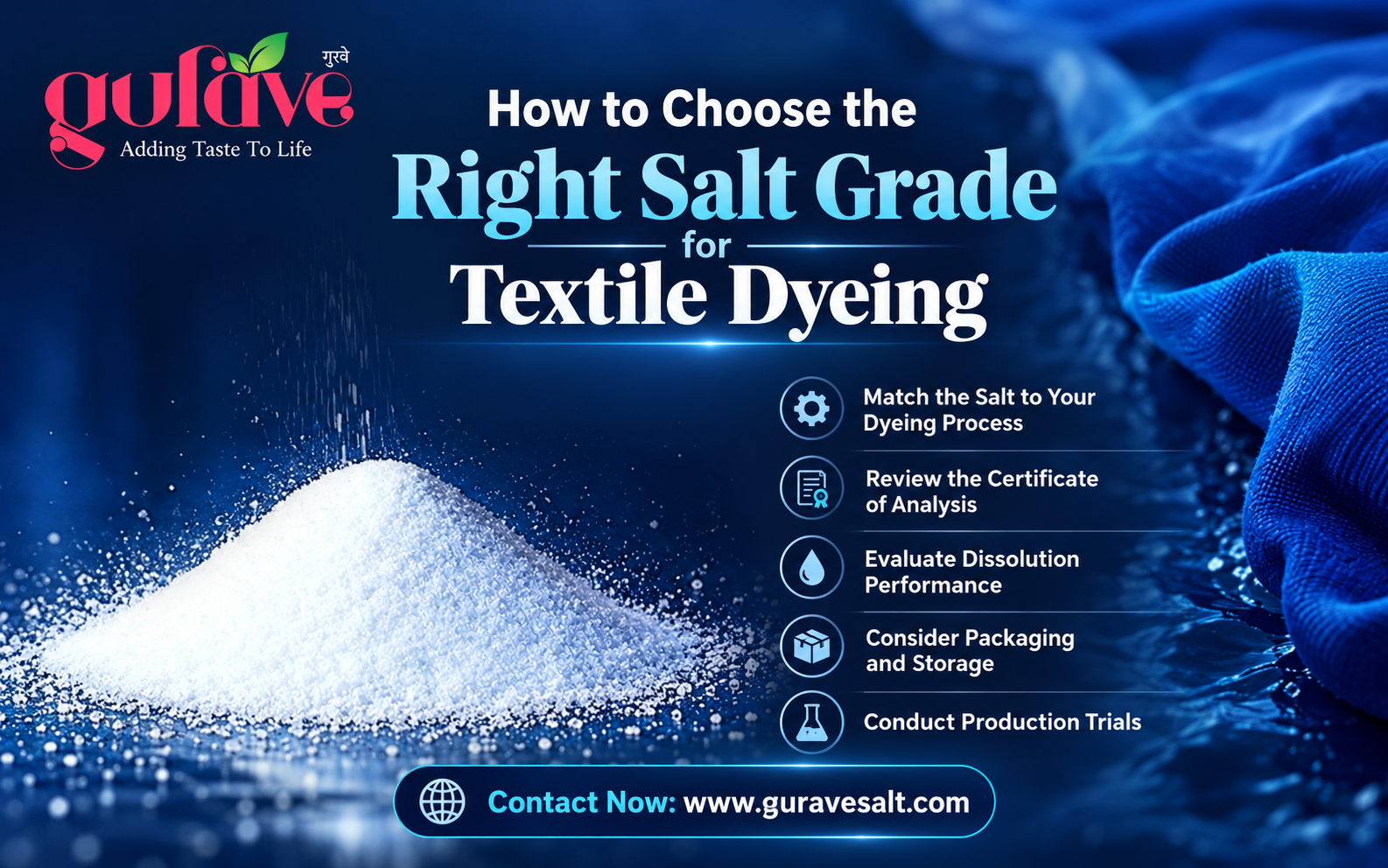
3. Evaluate Dissolution Performance
Salt should dissolve at a suitable rate for the equipment and dosing method.
Undissolved particles may create handling difficulties or interfere with controlled chemical addition. Where necessary, buyers can conduct a dissolution test using their actual process conditions.
4. Consider Packaging and Storage
Packaging should protect salt against unwanted moisture and contamination during transportation and storage.
Textile mills purchasing large quantities should consider bag size, warehouse conditions, unloading arrangements and compatibility with their material-handling equipment.
5. Conduct Production Trials
Before changing salt grades or suppliers, textile manufacturers should consider controlled testing.
A trial can help assess dissolution, dyeing behavior, process compatibility and consistency with existing production requirements.
Common Problems Caused by Unsuitable Textile Dyeing Salt
Salt quality is one factor that can influence dyeing performance. Materials with unsuitable or inconsistent characteristics may contribute to processing difficulties.
Uneven Dye Uptake
Poorly controlled salt addition or inconsistent chemical conditions can contribute to variations in dye uptake.
However, uneven shades may also arise from circulation problems, temperature differences, fabric preparation or dyeing procedures.
Insoluble Residue
Salt containing excessive insoluble particles may introduce unwanted residue into preparation tanks, filters or processing equipment.
Routine quality checks and appropriate dissolution procedures can help minimize these risks.
Unexpected Chemical Interactions
Calcium, magnesium and other impurities may interact with dyes or processing auxiliaries under certain conditions.
Their significance depends on the chemical system being used, making product specifications and process-water quality important considerations.
Storage and Handling Difficulties
Salt exposed to moisture may form lumps or become difficult to discharge from bags and hoppers.
Suitable packaging, dry storage conditions and appropriate stock handling can support smoother day-to-day operations.
Why Choose Gurave Salt for Textile Dyeing Salt?
Selecting a dependable textile salt manufacturer is important for textile businesses that need repeatable material quality, dependable deliveries and appropriate technical documentation.
Based in Kutch, Gujarat, India, Gurave Salt (Shree Krishna & Co) manufactures and supplies salt products for industrial applications, including textile processing. Its textile salt range includes refined and semi-refined sodium chloride products intended for industrial buyers.
According to its published product information, Gurave Salt offers textile salt with a stated minimum NaCl purity of 98% and a granule-size range of 0.3–1.2 mm. The company also lists 25 kg, 35 kg and 50 kg packaging options, along with bulk supply arrangements. Buyers should request current specifications and confirm availability before ordering.
What Makes Gurave Salt a Practical Supply Option?
- Textile-focused product range: Sodium chloride products intended for textile-industry applications.
- Published product specifications: Information covering purity, particle size and processing type.
- Packaging flexibility: Multiple bag sizes for different purchasing and handling requirements.
- Manufacturing location: Operations based in Gujarat, an established salt-producing region of India.
- Export-oriented supply: Services for domestic and international buyers requiring industrial salt.
Textile manufacturers can discuss their required composition, order volume, packaging and delivery destination with Gurave Salt before selecting a product.
Frequently Asked Questions About Salt Used in Textile Dyeing
1. Which Salt Is Commonly Used in Cotton Dyeing?
Sodium chloride is commonly used as an electrolyte in conventional reactive dyeing of cotton. Sodium sulfate is another option used in selected dyeing systems. The appropriate material depends on the dye formulation and operating conditions.
2. Why Is Sodium Chloride Used in Textile Dyeing?
Sodium chloride helps reduce electrostatic repulsion between anionic dyes and cellulosic fibres in certain dyeing processes. This can encourage dye uptake and support the required level of dye exhaustion.
3. Can Ordinary Table Salt Be Used for Textile Dyeing?
Ordinary table salt contains sodium chloride, but it may also contain iodine compounds or anti-caking additives. Its composition and suitability must be checked before industrial use. Textile manufacturers should select materials that meet their approved process specifications rather than assume that food-grade salt is interchangeable with textile-grade salt.
4. What Is the Difference Between Sodium Chloride and Glauber’s Salt?
Sodium chloride has the chemical formula NaCl, whereas Glauber’s salt is sodium sulfate decahydrate. Both can serve as electrolytes in certain dyeing processes, but they have different chemical compositions and should be used according to the appropriate dyeing recipe.
5. How Can Textile Manufacturers Check Salt Quality Before Purchasing?
Buyers should request a product specification and, where appropriate, a batch Certificate of Analysis. Important parameters include sodium chloride content, calcium and magnesium levels, moisture, insoluble matter and particle size. Production testing may also be necessary before approving a new grade.
Conclusion
The type of salt selected for textile dyeing can influence how effectively a dyeing process operates. Refined sodium chloride and suitable semi-refined industrial grades are commonly considered, while sodium sulfate offers an alternative electrolyte for certain applications.
For textile manufacturers, the best choice is not necessarily the salt with the highest advertised purity or lowest purchase price. It is the grade that meets the dyeing process’s chemical requirements, dissolves appropriately, can be handled efficiently and delivers consistent specifications.
Gurave Salt supplies textile-focused sodium chloride products for industrial buyers. Businesses planning bulk purchases can explore its textile dyeing salt range and request current product specifications, packaging information and quotations for their production requirements.